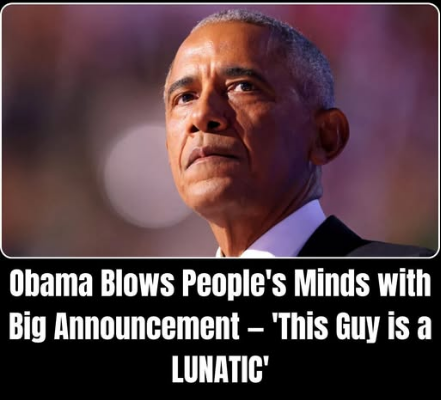
Former President Barack Obama on Tuesday described the killing of conservative activist Charlie Kirk as “horrific and a tragedy,” while also warning that political rhetoric from the current administration has fueled division in the country.
Obama delivered his remarks at the Jefferson Educational Society’s 17th annual global summit in Erie, Pennsylvania, one week after Kirk was shot and killed during a Turning Point USA event at Utah Valley University.
“Regardless of where you are on the political spectrum, what happened to Charlie Kirk was horrific and a tragedy,” Obama said.
The former president told the audience he had not known Kirk personally but acknowledged his prominence in national politics. “Obviously I didn’t know Charlie Kirk,” Obama said. “I was generally aware of some of his ideas. I think those ideas were wrong, but that doesn’t negate the fact that what happened was a tragedy and that I mourn for him and his family.”
Obama cautioned that the country faces “a political crisis of the sort that we haven’t seen before,” suggesting that the tone set by the current White House was contributing to the problem.
“Those extreme views were not in my White House,” Obama said. “I wasn’t empowering them. I wasn’t putting the weight of the United States government behind them. When we have the weight of the United States government behind extremist views, we’ve got a problem.”
He also argued that recent efforts to clamp down on commentary following Kirk’s death reflect a dangerous trend. “When I hear not just our current president, but his aides, who have a history of calling political opponents ‘vermin,’ enemies who need to be ‘targeted,’ that speaks to a broader problem that we have right now, and something that we’re going to have to grapple with — all of us,” Obama said.
The White House issued a swift rebuttal on Wednesday, accusing Obama of hypocrisy.
“Barack Hussein Obama is the architect of modern political division in America — famously demeaning millions of patriotic Americans who opposed his liberal agenda as ‘bitter’ for ‘cling(ing) to guns or religion,’” spokeswoman Abigail Jackson said in a statement.
“Obama used every opportunity to sow division and pit Americans against each other, and following his presidency more Americans felt Obama divided the country than felt he united it,” Jackson continued. “His division has inspired generations of Democrats to slander their opponents as ‘deplorables,’ or ‘fascists,’ or ‘Nazis.’ If he cares about unity in America, he would tell his own party to stop their destructive behavior.”
Kirk, 31, was fatally shot on Sept. 10 while speaking to a crowd of several thousand at Utah Valley University. Prosecutors say the suspected gunman, 22-year-old Tyler Robinson, climbed onto a campus rooftop, fired a single round, and struck Kirk in the neck. Robinson was arrested days later and charged this week with aggravated murder and related crimes. Prosecutors have indicated that the case may qualify for the death penalty under Utah law.
Kirk, the founder of Turning Point USA, was widely recognized as a leading conservative activist and credited with helping to mobilize younger Republican voters. His death has drawn tributes from political allies, including President Donald Trump, who posthumously awarded him the Presidential Medal of Freedom.
Obama weighed in shortly after the shooting. In a Sept. 10 post on X, he wrote: “We don’t yet know what motivated the person who shot and killed Charlie Kirk, but this kind of despicable violence has no place in our democracy. Michelle and I will be praying for Charlie’s family tonight, especially his wife Erika and their two young children.”
The exchange between Obama and the Trump White House highlights how Kirk’s assassination has quickly become a political flashpoint. Democrats such as Illinois Gov. J.B. Pritzker have linked the tragedy to rising extremism and rhetoric nationwide, while Republicans have focused on the radicalization of the shooter due in part to overheated rhetoric about conservatives purportedly being “fascists.”
The Middle East was thrust into deeper turmoil over the weekend after the United States entered Israel’s war against Iran by launching coordinated strikes on three of Tehran’s nuclear sites. The move marked one of Washington’s most consequential military actions in the region in recent years and immediately sparked global alarm over the possibility of a wider regional war.
Trump’s Address
In a nationally televised speech from the White House, President Donald Trump confirmed that American forces had targeted Iran’s nuclear enrichment program. He boasted that U.S. strikes had “completely and totally obliterated” three facilities, though Pentagon officials later clarified that, while damage was extensive, the full scale of destruction was still under review.
“Iran, the bully of the Middle East, must now make peace,” Trump declared. “If they do not, future attacks will be far greater and much easier.” His words underscored Washington’s readiness to escalate unless Tehran backed down.
The operation marked a striking reversal in U.S. strategy. Only days before, Trump suggested diplomacy would be given up to two weeks to bear fruit before military measures were considered. Acting so quickly has now almost certainly shut the door on near-term negotiations.
Pentagon Briefing
Gen. Dan Caine, Chairman of the Joint Chiefs of Staff, reported that the U.S. military had carried out overnight strikes causing “severe damage and destruction” at Fordo, Natanz, and Isfahan. The operation relied on cruise missiles and more than a dozen 30,000-pound bunker-buster bombs.
Officials admitted that Fordo, long reinforced against outside attack, was not entirely destroyed, though its infrastructure was significantly crippled. They cautioned that Iran may still retain partial nuclear enrichment capabilities despite the assault.
Iran’s Reaction
Tehran reacted with fury. Iranian Foreign Minister Abbas Araghchi denounced the strikes in Istanbul, accusing Washington of sabotaging diplomacy and disregarding European mediation.
“Iran reserves every option to defend its people and its national interests,” Araghchi warned, though he offered no specifics. Asked whether U.S. bases might become targets, he said only: “Our response will be based on legitimate self-defense. Many options lie before us.”
Within hours, Iran unleashed another missile salvo against Israel. Sixteen people were reported injured, adding to the steady exchanges of fire that have erupted since June 13.Regional Impact
The strikes have left the region on high alert. More than 40,000 American troops are stationed in Middle Eastern bases and naval fleets, and the Pentagon is bracing for retaliation. While Iran has depleted much of its medium-range missile arsenal, its stock of rockets, drones, and unconventional weapons still poses a major threat.
Israel welcomed Washington’s direct involvement. Prime Minister Benjamin Netanyahu praised the joint operations, noting they were “carried out in full coordination with the American military,” emphasizing a united front.
Diplomatic Fallout
The decision has thrown international diplomacy into crisis. European leaders expressed deep frustration, warning that the strikes have eliminated prospects for de-escalation. Analysts fear Iran, now feeling cornered, will refuse to engage in talks.
The U.N. Security Council is expected to convene an emergency session, though calls for restraint appear fragile as both sides continue to trade fire.
The Escalation Threshold
By directly targeting Iran’s nuclear program, Washington has crossed a critical line. Until now, U.S. involvement had been limited to support roles for Israel. This strike signals a new readiness to expand militarily, fueling concerns of a wider war.
Critics warn that the move will only embolden Iranian hardliners who argue against dealing with the West. Early signals from Tehran suggest leaders are preparing for long-term confrontation rather than backing down.
In an era where economic inequality and intergenerational wealth transfer have become central political issues, innovative approaches to government-sponsored savings and investment programs are gaining attention as potential solutions to long-term financial challenges facing American families. Recent proposals for government-funded investment accounts represent a significant shift in how policymakers think about wealth building, economic opportunity, and the role of government in supporting long-term financial security.
These policy innovations reflect broader debates about fiscal responsibility, economic growth strategies, and the appropriate balance between government support and individual responsibility in building financial security for future generations.
Understanding Government-Sponsored Investment Programs
Government-sponsored investment accounts represent a relatively new approach to addressing wealth inequality and providing economic opportunities for citizens from birth. These programs typically involve initial government contributions to individual accounts that grow over time through market investments, creating potential wealth accumulation that might not otherwise be possible for many families.
The concept draws inspiration from successful programs in other countries and builds on existing American policies like 401(k) retirement accounts and education savings plans. However, the idea of providing universal government-funded accounts represents a significant expansion of these concepts into broader wealth-building strategies.
These accounts typically operate by providing initial government seed money that is invested in diversified portfolios tracking broader market performance. The accounts remain under individual or family control while benefiting from government contributions and potential tax advantages that enhance long-term growth potential.
The timing of when individuals can access these funds varies by program design, with some proposals allowing access for specific purposes like education or home purchases, while others function more like retirement accounts with longer-term restrictions on withdrawals.
The investment strategy for these accounts often involves broad market index funds or similar diversified approaches designed to capture overall economic growth while minimizing the complexity and cost of individual investment management.
Administrative oversight and regulation of these accounts require careful consideration to balance growth potential with appropriate protections against fraud, mismanagement, or excessive risk-taking that could jeopardize the intended benefits.
Historical Context and Policy Precedents
The concept of government-sponsored savings and investment programs has deep historical roots in American policy, from Social Security to more recent innovations like Health Savings Accounts and 529 education savings plans.
Social Security represents the most successful large-scale government program designed to provide financial security, though it operates on a pay-as-you-go basis rather than individual account investments. The program’s success in reducing elderly poverty demonstrates the potential impact of government-sponsored financial security programs.
The Thrift Savings Plan for federal employees provides another model for government-sponsored investment accounts, offering low-cost investment options that have generated substantial returns for participants over time. This program demonstrates how government administration can provide cost-effective investment management.
Individual Retirement Accounts (IRAs) and 401(k) plans show how tax-advantaged savings accounts can encourage long-term wealth building, though these programs primarily benefit higher-income individuals who can afford to contribute significant amounts.
529 education savings plans demonstrate how targeted investment accounts can address specific financial goals while providing tax advantages and investment growth opportunities for families planning for future expenses.
International examples, including programs in the United Kingdom and Singapore, provide models for how government-sponsored investment accounts can work in practice, offering lessons about implementation challenges and potential benefits.
Economic Theory and Wealth Building Strategies
The economic rationale for government-sponsored investment accounts rests on several key principles related to compound growth, market participation, and wealth inequality reduction.
Compound interest represents one of the most powerful wealth-building tools available, but it requires time and initial capital to be effective. Government-provided seed money can jumpstart this process for individuals who might not otherwise have access to investment opportunities.
Market participation has historically been correlated with wealth accumulation, but barriers including lack of initial capital, financial literacy, and access to low-cost investment options have prevented many Americans from benefiting from market growth.
The wealth gap in America has grown significantly over recent decades, with asset ownership playing a crucial role in determining long-term financial outcomes. Government investment accounts could help democratize asset ownership and provide broader participation in economic growth.
Risk diversification through broad market investments can provide growth potential while managing individual investment risks, making these programs more suitable for universal participation than more speculative investment strategies.
Economic mobility research suggests that access to assets and investment opportunities during childhood and young adulthood can significantly affect long-term economic outcomes, providing theoretical support for early-intervention investment programs.
The multiplier effect of government investment in individual accounts could generate broader economic benefits as increased investment capital supports business growth and job creation throughout the economy.
Implementation Challenges and Administrative Considerations
Creating and managing large-scale government investment account programs involves complex administrative challenges that require careful planning and ongoing oversight to ensure program success.
Account administration requires sophisticated systems to track millions of individual accounts, manage investments, provide customer service, and ensure compliance with various regulatory requirements. The scale of such systems presents significant technological and operational challenges.
Investment management decisions affect the growth potential and risk profile of all program participants, requiring careful selection of investment options that balance growth potential with appropriate risk management for a diverse population of account holders.
Regulatory oversight must address issues including fiduciary responsibility, fraud prevention, account portability, and coordination with other government programs to avoid conflicts or unintended consequences.
Cost management is crucial for program success, as excessive administrative fees can significantly reduce the long-term value of investment accounts. Government programs may achieve economies of scale that reduce costs compared to private sector alternatives.
Customer service and education requirements include helping account holders understand their accounts, make appropriate decisions about contributions and withdrawals, and navigate the complexities of long-term investment planning.
Integration with existing government programs and tax systems requires careful coordination to avoid duplication, ensure appropriate tax treatment, and maintain compatibility with other social safety net programs.
Funding Mechanisms and Fiscal Impact
Government investment account programs require sustainable funding mechanisms that balance program benefits with fiscal responsibility and broader budgetary considerations.
Direct government appropriations represent the most straightforward funding approach, though they require ongoing political support and compete with other government spending priorities for limited budget resources.
Tax credit mechanisms could provide indirect funding while potentially garnering broader political support, though they may be more complex to administer and could affect government revenue in different ways than direct spending.
Dedicated revenue sources, such as specific taxes or fees, could provide sustainable funding while clearly linking program costs to identifiable revenue streams, potentially improving political sustainability.
Deficit financing could fund immediate program launch while spreading costs over time, though this approach raises questions about intergenerational equity and fiscal responsibility that may affect political viability.
Public-private partnerships might leverage private sector expertise and resources while maintaining government oversight and ensuring program accessibility, though such arrangements require careful structuring to protect public interests.
The long-term fiscal impact includes both direct program costs and potential economic benefits from increased investment and wealth accumulation that could reduce future government social spending needs.
Political Considerations and Legislative Dynamics
Government investment account proposals involve complex political considerations that affect their likelihood of passage and long-term sustainability.
Partisan divides often emerge around questions of government role, fiscal responsibility, and the appropriate balance between individual and collective approaches to economic security, affecting bipartisan support prospects.
Interest group politics include support from advocacy organizations focused on wealth inequality and opposition from groups concerned about government spending or market intervention, creating complex coalitions around these proposals.
Regional considerations may affect support levels, as different areas of the country have varying perspectives on government programs and different economic conditions that influence the perceived value of investment accounts.
Implementation timing affects both practical considerations and political dynamics, with gradual phase-ins potentially building support through demonstrated success while immediate full implementation might generate stronger initial opposition.
Legislative packaging decisions about whether to include investment accounts in broader fiscal packages or advance them as standalone measures significantly affect political prospects and potential compromises.
Electoral considerations influence politician support for these programs, with different constituencies having varying levels of enthusiasm for government investment programs and long-term wealth building initiatives.
Economic Impact and Market Effects
Large-scale government investment programs could have significant effects on financial markets and broader economic conditions that merit careful analysis and planning.
Market capitalization effects from substantial new investment flows could influence stock prices and market dynamics, potentially affecting existing investors and overall market stability in ways that require careful management.
Investment industry impacts include potential changes in fee structures, service offerings, and competitive dynamics as government programs alter the investment management landscape.
Economic growth effects could result from increased investment capital and broader market participation, though the magnitude and timing of such effects remain subject to economic debate and empirical analysis.
Wealth distribution changes represent a primary goal of these programs, but the actual impact depends on program design, participation rates, and broader economic conditions that affect investment returns.
Consumer behavior modifications might result from increased financial security and investment experience, potentially affecting savings rates, spending patterns, and economic participation in ways that extend beyond the direct program effects.
International competitiveness considerations include how government investment programs might affect America’s economic position relative to other countries with different approaches to wealth building and economic security.
Risk Management and Consumer Protection
Government investment programs require comprehensive risk management strategies to protect participants while maintaining growth potential and program sustainability.
Market risk represents an inherent challenge for any investment program, requiring careful consideration of how to manage potential losses while maintaining long-term growth objectives and participant confidence.
Operational risks include system failures, administrative errors, and fraud prevention measures that must be addressed through robust internal controls and oversight mechanisms.
Political risk involves the possibility that future policy changes could alter program terms or funding, potentially affecting participant confidence and long-term planning assumptions.
Individual financial risks include the possibility that participants might make poor decisions about account management or withdrawals that could undermine the program’s intended benefits.
Systemic risks involve potential broader economic effects from large-scale government investment programs that could affect market stability or create unintended economic consequences.
Consumer education and protection measures must ensure that participants understand their accounts, potential risks, and available options while protecting against exploitation or misleading practices.
International Comparisons and Best Practices
Examining government investment programs in other countries provides valuable insights into potential benefits, challenges, and design considerations for American policy development.
The United Kingdom’s Child Trust Fund program provided government contributions to investment accounts for children, offering lessons about implementation challenges, political sustainability, and actual outcomes for participants.
Singapore’s Central Provident Fund demonstrates how government-managed investment accounts can provide retirement security while supporting broader economic development goals through coordinated investment strategies.
Canada’s Registered Education Savings Plans show how government contributions and tax advantages can encourage private savings while supporting specific policy objectives like education access.
Australia’s superannuation system illustrates how mandatory contribution requirements can build substantial retirement wealth while managing administrative costs through centralized systems.
Nordic countries’ wealth fund approaches demonstrate how government investment strategies can support long-term economic goals while managing natural resource revenues and intergenerational equity concerns.
These international examples provide insights into design features, implementation strategies, and potential outcomes that can inform American policy development while recognizing important differences in political systems and economic conditions.
Long-term Outcomes and Generational Effects
Government investment accounts could have profound effects on wealth accumulation patterns and economic opportunities that extend across multiple generations.
Intergenerational wealth transfer patterns might change significantly if government programs provide universal access to investment accounts and asset accumulation opportunities previously available only to wealthy families.
Educational and career choices could be affected by the financial security provided by investment accounts, potentially enabling individuals to pursue opportunities that might otherwise be financially unfeasible.
Homeownership and asset accumulation patterns might shift as investment account balances provide down payment assistance or collateral for other wealth-building activities.
Retirement security could be enhanced significantly for individuals whose government investment accounts provide additional resources beyond Social Security and employer-sponsored retirement plans.
Economic mobility improvements might result from reduced barriers to asset ownership and investment participation, potentially breaking cycles of poverty and limited economic opportunity.
Social cohesion effects could include reduced inequality and increased shared stake in economic growth and market performance across different socioeconomic groups.
Conclusion: Balancing Innovation with Responsibility
Government investment account proposals represent innovative approaches to addressing wealth inequality and providing economic opportunities for future generations. These programs offer significant potential benefits while raising important questions about implementation, funding, and long-term sustainability.
The success of such programs depends on careful design that balances growth potential with appropriate risk management, sustainable funding with fiscal responsibility, and universal access with efficient administration. Learning from international examples and existing American programs can help inform policy development while recognizing the unique characteristics of the American political and economic system.
Political viability requires building broad coalitions that recognize both the potential benefits and legitimate concerns about government investment programs. Successful implementation demands bipartisan support and long-term commitment that transcends electoral cycles and partisan disagreements.
The ultimate value of government investment accounts will be measured not just in financial returns but in their contribution to economic opportunity, social mobility, and shared prosperity that strengthens American society for future generations. As policymakers continue to debate these proposals, the focus should remain on designing programs that effectively serve the public interest while maintaining fiscal responsibility and economic sustainability.
Whether through government investment accounts or alternative approaches, addressing wealth inequality and providing economic opportunities for all Americans remains a central challenge that requires innovative thinking, careful implementation, and sustained commitment to policies that support long-term economic security and shared prosperity.