A stunning political realignment has emerged from an unexpected source as a prominent Democratic senator delivered full-throated support for one of the Trump administration’s most controversial military actions. The endorsement represents a dramatic departure from typical partisan battle lines and signals potential bipartisan support for aggressive counter-narcotics operations that challenge traditional legal and diplomatic boundaries.
The cross-party backing comes at a critical moment when the administration faces intense scrutiny over the legal foundations of its military intervention against suspected drug traffickers. What began as a routine counter-narcotics operation has evolved into a broader test of presidential war powers, international law, and America’s willingness to use lethal force against criminal organizations that threaten national security through drug trafficking.
The unexpected Democratic support threatens to undermine opposition party criticism while potentially establishing precedent for expanded military operations against drug cartels that could reshape America’s approach to the ongoing fentanyl crisis and transnational organized crime.
U.S. Senator John Fetterman (D-PA) delivered an unequivocal defense of President Trump’s use of military force against suspected drug smugglers, directly challenging his own party’s criticism and providing crucial political cover for the administration’s controversial operation. His statement represents one of the most significant instances of cross-party support for Trump military policy since the administration began implementing its aggressive counter-narcotics strategy.“Overdosing takes 100,000+ American lives every year. Cartels wage this war against our nation everyday. Maybe it’s time for our nation to push back and hold the cartels fully accountable,” Fetterman wrote on X, framing the military action as necessary self-defense rather than questionable aggression. His language deliberately characterized drug trafficking as warfare against America, providing moral justification for military response.Fetterman’s intervention carries particular political weight because of his progressive credentials and his previous criticism of certain Trump policies, making his support for military action against drug traffickers more credible to moderate Democrats and independents who might otherwise oppose expanded presidential war powers. His backing suggests that the drug crisis has created bipartisan urgency that transcends traditional political divisions.
The Pennsylvania senator’s emphasis on the scale of American overdose deaths—over 100,000 annually—provides stark statistical justification for extraordinary measures that might otherwise face constitutional or legal challenges. By framing the issue as existential threat to American lives, Fetterman creates political space for military responses that would be controversial in other contexts.
His statement also implicitly criticizes traditional law enforcement approaches to drug trafficking as inadequate to address the magnitude of the crisis, suggesting that military intervention represents necessary escalation rather than executive overreach or international law violation.
The New York Times investigation that prompted Fetterman’s defense raised fundamental questions about the legal foundations of Trump’s military operation against suspected drug smugglers. Reporter Charlie Savage characterized the action as having “no clear legal precedent or basis,” highlighting the constitutional and international law implications of using military force against criminal organizations rather than traditional state actors.
The legal controversy centers on whether drug trafficking organizations, even those designated as terrorist groups, can be legitimate targets for military action under existing presidential war powers and international law. Traditional counter-narcotics operations typically involve law enforcement agencies working with military support, rather than direct military strikes against suspected traffickers.
The administration’s legal justification appears to rely on the designation of targeted organizations as terrorist groups, which theoretically brings them under existing authorizations for military force against international terrorism. However, legal experts note that this interpretation significantly expands the scope of military action beyond traditional terrorism contexts to encompass organized crime.
The precedent established by this operation could have far-reaching implications for future military interventions against criminal organizations, potentially blurring the lines between law enforcement and military operations in ways that challenge traditional constitutional boundaries and international legal frameworks.
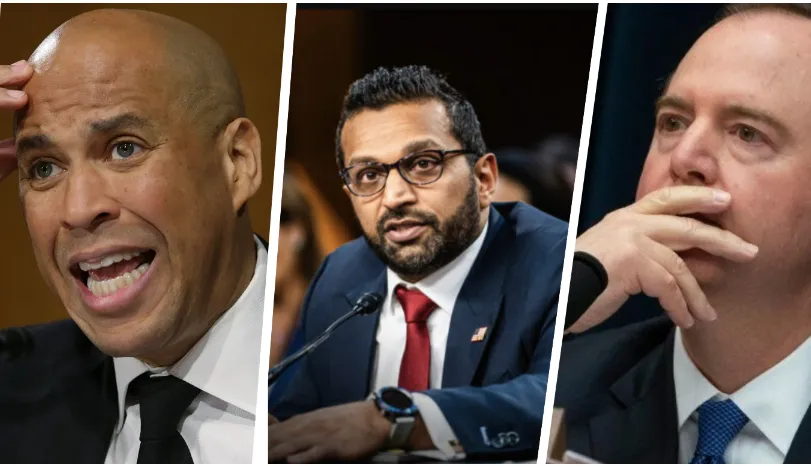
FBI Director Kash Patel stood firm against relentless Democratic attacks during congressional hearings this week, defending the integrity of the bureau while exposing the partisan theatrics of Senators and Representatives obsessed with political theater. Democrats pressed him on the handling of the Jeffrey Epstein case and the recent assassination of conservative activist Charlie Kirk, but Patel remained unshaken, emphasizing law, evidence, and accountability over political grandstanding.
During the House Judiciary Committee hearing on September 17, 2025, Representative Jamie Raskin (D-MD) accused Patel of withholding critical information on Epstein. Patel firmly rejected the charge, stating, “I’m not going to break the law to satisfy your
curiosity.” He made clear that the FBI had released all documents allowed by law, insisting that further disclosures required judicial approval.
Representative Eric Swalwell (D-CA) tried to twist Patel’s refusal into an implication of guilt, claiming it showed a “consciousness of guilt.” Patel called out the baseless accusation, replying bluntly, “bulls**t,” leaving Democrats sputtering and highlighting the hollowness of their attacks.
In the Senate Judiciary Committee the day before, Senator Cory Booker (D-NJ) accused Patel of weakening national security. Patel countered, asserting, “Booker’s rant of false information does not bring this country together. It’s my time, not yours.” When Booker cried, “My God! My God!” the spectacle only underscored the Democrats’ desperation.
FBI Director Kash Patel stood firm against relentless Democratic attacks during congressional hearings this week, defending the integrity of the bureau while exposing the partisan theatrics of Senators and Representatives obsessed with political theater. Democrats pressed him on the handling of the Jeffrey Epstein case and the recent assassination of conservative activist Charlie Kirk, but Patel remained unshaken, emphasizing law, evidence, and accountability over political grandstanding.
During the House Judiciary Committee hearing on September 17, 2025, Representative Jamie Raskin (D-MD) accused Patel of withholding critical information on Epstein. Patel firmly rejected the charge, stating, “I’m not going to break the law to satisfy your curiosity.” He made clear that the FBI had released all documents allowed by law, insisting that further disclosures required judicial approval.
Representative Eric Swalwell (D-CA) tried to twist Patel’s refusal into an implication of guilt, claiming it showed a “consciousness of guilt.” Patel called out the baseless accusation, replying bluntly, “bulls**t,” leaving Democrats sputtering and highlighting the hollowness of their attacks.
In the Senate Judiciary Committee the day before, Senator Cory Booker (D-NJ) accused Patel of weakening national security. Patel countered, asserting, “Booker’s rant of false information does not bring this country together. It’s my time, not yours.” When Booker cried, “My God! My God!” the spectacle only underscored the Democrats’ desperation.
Senator Adam Schiff (D-CA) tried to intimidate Patel over the handling of Ghislaine Maxwell’s prison transfer. Patel called him a “political buffoon,” exposing Schiff’s theatrics and partisan obsession. When Schiff suggested undue influence, Patel stood firm, refusing to bow to baseless insinuations.
Patel’s hearings made it clear that Democrats were more interested in political attacks than justice. He repeatedly defended the FBI’s swift response in the Charlie Kirk assassination, noting that a suspect was apprehended within 36 hours. “Our agents acted decisively and within legal bounds,” he said. “The safety of American citizens is our top priority, not political theater.”
When Democrats tried to accuse the FBI of selectively releasing documents to shield political allies, Patel hit back. “I do not engage in cover-ups, and I will not tolerate baseless attacks on my integrity or the FBI’s mission,” he said, demonstrating unshakable resolve in the face of partisan pressure.
Booker suggested political bias affected investigations, but Patel dismissed the claim: “Senator Booker, your accusations are unfounded. Our focus is law enforcement, not politics.”
Schiff attempted to leverage Epstein’s connections to attack Patel personally. Patel responded, “We follow evidence, not rumors. Allegations are not facts. The FBI releases what the law allows and protects citizens’ rights in the process.”
Patel also called out Democrats for their melodrama. “This is about public safety, not spectacle,” he said. “The American people deserve accountability, not a partisan circus.”
Representative Raskin tried to paint Patel as part of a systemic problem within the FBI, but Patel pointed to arrests and prosecutions as proof of results. “Results speak louder than accusations,” he said. “We enforce the law impartially.”
He addressed media spin, noting, “Much of what is being reported is sensationalized. My responsibility is to the law and the truth, not to narratives spun for political gain.”
Conservative outlets hailed Patel’s forthrightness. Fox News noted his “commitment to transparency and law enforcement integrity,” highlighting that Democrats’ attacks were politically motivated.
The New York Post highlighted Patel’s calm but firm approach under pressure, quoting him: “I don’t give a damn about criticism that isn’t rooted in fact. My duty is to enforce the law.”
Critics focused on moments of visible frustration, but Patel’s sharp rebuttals exposed the Democrats’ hollow accusations and their failure to understand law enforcement priorities.
Patel also addressed allegations of politically motivated firings within the FBI. Former agents accused him of retribution, but Patel confirmed that all personnel actions were based on legal procedure and performance metrics.
He defended the FBI’s communication strategy, stating, “We cannot compromise ongoing cases for political theater,” emphasizing the agency’s commitment to law over politics.
On the Kirk investigation, Patel stressed professionalism and methodical procedures. “The suspect’s quick apprehension reflects rigorous investigative work, not political expediency.”
The hearings underscored the partisan divide: Democrats attacked reflexively, while Republicans emphasized law, order, and results.
Patel noted that under his leadership, the FBI increased transparency where legally permissible, improving public reporting without compromising confidentiality.
When Swalwell tried to insinuate favoritism, Patel said, “Every decision is evidence-based. Politics has no role in law enforcement decisions.”
The hearings drew massive public attention. Patel’s firm stance became a symbol of principled law enforcement resisting political intimidation.
Critics accused him of politicizing the bureau, yet Patel made clear that partisan attacks would not distract him from enforcing the law.
Conservative voices praised Patel’s assertiveness, signaling that the FBI under his guidance will prioritize law and order, not partisan politics.
The Epstein case remained a focal point. Patel reiterated, “We have released more than any prior administration,” showing the Democrats’ claims were baseless.
Regarding Charlie Kirk’s assassination, Patel emphasized the FBI’s rapid and professional response, countering criticism with facts.
Tension in the Middle East: A Region on Edge
Whispers in diplomatic corridors turned into uneasy silence yesterday as Israel abruptly halted operations in a contested region — a move that quickly drew a stark warning from Tehran. The timing has left analysts on edge,
unsure whether this is routine political maneuvering or the first ripple of a broader, more dangerous strategy. Behind closed doors, intelligence briefings have grown tense, and Western military planners are preparing quietly for scenarios the public has yet to hear.
Earlier today, Israeli officials confirmed the cessation of active military operations, triggering heightened alert levels worldwide. Intelligence reports suggest that Iran’s warning is tied to recent Israeli airstrikes and a wave of cyberattacks suspected to involve Iranian-backed actors. The resulting atmosphere is one of cautious vigilance, with both sides acutely aware of how quickly events could escalate.
U.S. defense authorities have increased readiness across strategic bases while keeping lines open with NATO allies. Although no evacuation orders have been issued, precautionary measures have been intensified. A White House statement is expected, though officials have so far urged calm and restraint.
Lawmakers and defense experts alike are calling for measured responses, warning that panic and speculation could inflame tensions. Some analysts suggest that Iran’s warning may be part of a psychological or cyber strategy rather than an immediate physical threat. Yet the potential for rapid escalation remains real, and military planners are leaving nothing to chance.
Meanwhile, social media has erupted with unverified claims, prompting authorities to stress reliance on credible reporting and to avoid spreading misinformation. Behind the public-facing statements, national security agencies are preparing for multiple outcomes — from reinforcing cyber defenses and monitoring airspace to deploying diplomatic channels aimed at de-escalation.
Conclusion
As the situation continues to unfold, the Middle East teeters on a knife’s edge. The next moves from Israel, Iran, and global powers will determine whether tensions fade or flare. For now, the world holds its breath, hoping that calculated restraint can prevent a crisis from igniting.