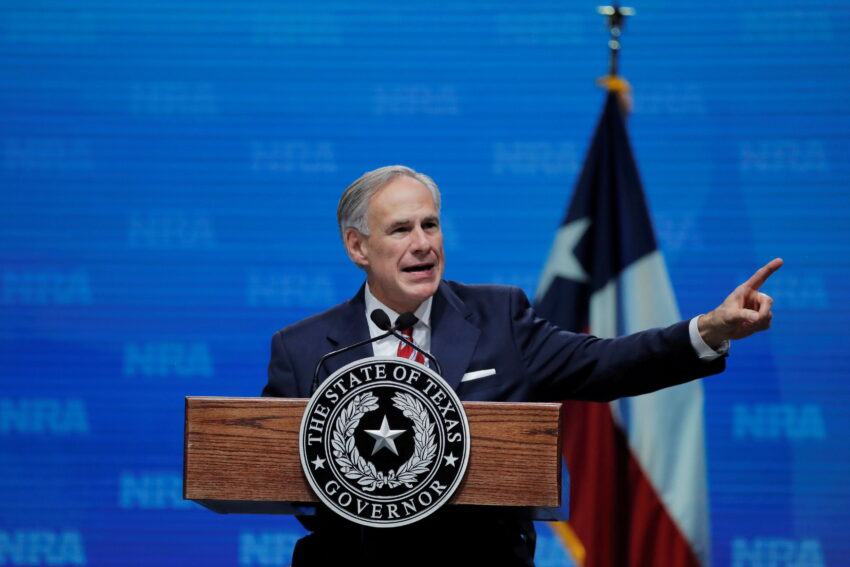
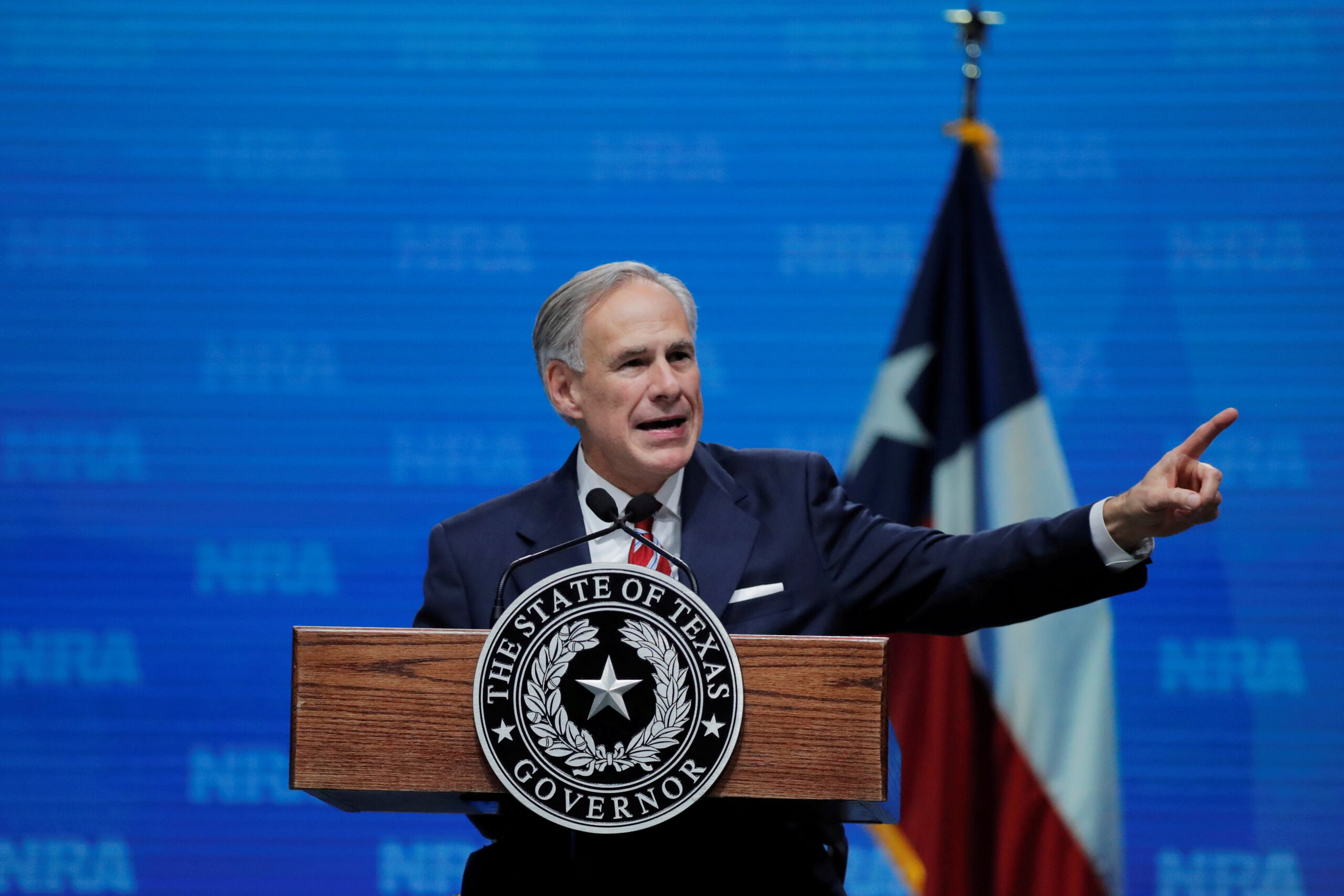
Governor Greg Abbott sent social media into overdrive this week after jokingly warning that he would impose a “100 percent tariff” on anyone fleeing New York City for Texas if progressive candidate Zohran Mamdani wins the mayor’s race.
Abbott’s post on X (formerly Twitter) captured the mood of many Texans frustrated by what they view as the consequences of liberal policies—high taxes, crime, and economic decline—driving residents away from blue states.
While the governor’s remark drew headlines, supporters say it underscores a serious message: Texas’s economic strength and public safety record did not happen by accident.
Abbott’s office clarified that the statement was tongue-in-cheek but reflected the governor’s growing concern over the influx of residents from Democrat-run cities who then vote for the same policies they left behind.
“Texas has become America’s economic engine because we protect freedom, keep taxes low, and back the blue,” Abbott said in a follow-up statement.
“If people want to enjoy that success, they should embrace the principles that built it.”
Texas continues to lead the nation in job creation and business relocations, even as cities like New York and San Francisco struggle with population losses and rising costs of living.
Economists credit the state’s balanced budgets, energy independence, and pro-growth regulations as key to its stability during national downturns.
Conservatives argue that liberal leaders have undermined once-thriving cities with soft-on-crime policies and aggressive tax hikes, prompting families and businesses to seek refuge in Republican-led states.
Abbott’s playful “tariff” line resonated widely across social media, where thousands of users echoed the sentiment that Texas should protect its way of life.
“Texans built something worth preserving,” wrote one supporter. “We just don’t want outsiders bringing failed ideas with them.”
Democratic critics seized on the governor’s remark, calling it divisive. But Republicans counter that Abbott’s record—on border security, energy independence, and job creation—speaks for itself.
The governor has repeatedly urged new arrivals to respect local laws and values, emphasizing Texas’s unique blend of liberty and responsibility.
Under Abbott’s leadership, the state has attracted major employers such as Tesla, Oracle, and Samsung, while maintaining some of the nation’s lowest overall tax burdens.
Supporters say those achievements validate conservative governance in action and justify Abbott’s defense of Texas’s model.
“Texas doesn’t need to import New York’s problems,” said state Senator Bryan Hughes. “We need to keep exporting our solutions.”
The exchange comes amid growing national debate over population shifts from blue states to red, with U-Haul reporting record demand for one-way moves to Texas and Florida.
President Donald Trump is once again upping the pressure on Senate Judiciary Committee Chairman Chuck Grassley to do away with a century-old Senate tradition that places some constraints on the president’s authority to appoint judicial nominees.
Trump is targeting the Senate’s “blue slip” tradition, a time-honored Senate process that gives senators the right to approve or object to nominees nominated to serve as federal judges or U.S. attorneys in their home states.
Senators approve of a nominee by returning their blue slip to the Judiciary Committee Chairman. If a senator does not return their blue slip or returns it with objections, the nominee does not
advance. In blue states like New York, some of Trump’s judicial nominees have stalled out because Democratic senators have not returned blue slips.
In a post on his social media platform on Sunday evening, Trump made his continued displeasure with this Senate tradition known.
I have a Constitutional Right to appoint Judges and U.S. Attorneys, but that RIGHT has been completely taken away from me in States that have just one Democrat United States Senator,” Trump said. “This is because of an old and outdated “custom” known as a BLUE SLIP, that Senator Chuck Grassley, of the Great State of Iowa, refuses to overturn, even though the Democrats, including Crooked Joe Biden (Twice!), have done so on numerous occasions.”
This isn’t the first time that Trump has gone after blue slips and Grassley. But Grassley has consistently committed to maintaining the Senate tradition.
In a post on X on Monday, Grassley once again defended the Senate process.
“A U.S. Atty/district judge nominee without a blue slip does not hv the votes to get confirmed on the Senate floor & they don’t hv the votes to get out of cmte,” Grassley posted. “As chairman I set Pres Trump noms up for SUCCESS NOT FAILUREThe 100 yr old “blue slip” allows home state senators 2 hv input on US attys & district court judges In Biden admin Republicans kept 30 LIBERALS OFF BENCH THAT PRES TRUMP CAN NOW FILL W CONSERVATIVES.”
But Grassley’s pushback has not dissuaded Trump from trying to force modifications to the process.
While speaking with reporters in the Oval Office on Monday, Trump doubled down, saying he would file a lawsuit to challenge the use of blue slips, though he did not say who he intended to file suit against. He then blamed Grassley for a lag in the advancement of his appointees to be judges and U.S. attorneys.
“It’s a gentlemen’s agreement that’s about 100 years old, where if you have a president like a Republican, and if you have a Democrat senator, that senator can stop you from appointing a judge or or U.S. attorney in particular,” Trump said. “And this is based on an old custom. It’s not based on a law … And I think it’s unconstitutional. And I’ll probably be filing a suit on that pretty soon.”
The Senate has the authority to govern itself and typically retains authority to make its own rules and traditions. Blue slips are not codified in the Senate rules, but are rather a courtesy observed by the committee chairman.
The blue slip process goes back to at least 1917, according to the Congressional Research Service. Since the use of blue slips is not codified or in the committee’s rules, the chair has the discretion to determine whether a home state senator’s negative or withheld blue slip stops a judicial nomination from receiving consideration by the committee and whether it reaches the Senate floor.
Trump explicitly expressed his desire to advance nominees like Jay Clayton, who was appointed to serve as U.S. attorney for the Southern District of New York by Manhattan federal judges earlier this month despite his nomination being stalled in the Senate by Minority Leader Chuck Schumer’s refusal to return a blue slip on the nominee.
“That’s the only way you get by. But generally speaking, you can’t do that because you’ll have judges from the other party. So, so Jay Clayton just got approved and he’s in, but he didn’t get approved by the senators, Trump said.
Trump said the blue slip process was a barrier for him to get any Republican judges through — that he can now “only get a Democrat U.S. attorney.”
“The only person that I can get approved are Democrats or maybe weak Republicans. But we don’t want that. But the only person I will be able to get approved in any of those states where you have a Democrat will I can’t get a U.S. attorney. I can only get a Democrat U.S. attorney,” Trump said.
Still, Senate Republicans are generally opposed to modifying the tradition.
Sen. Thom Tillis, R-N.C., who serves on the Judiciary Committee and announced earlier this year he wouldn’t seek re-election next year, said in a post on X Monday that getting rid of the blue slip is “short-sighted.”
“Chairman Grassley is a principled conservative who wants to keep radical liberals off the bench. Getting rid of the blue slip is a terrible, short-sighted ploy that paves the path for Democrats to ram through extremist liberal judges in red states over the long-term,” Tillis posted. “It’s why radical liberal groups have been pushing to get rid of the blue slip for years — Republicans shouldn’t fall for it.”
A number of Senate Republicans spoke out when Trump last called for changes to the Senate process in July.
At the time, Majority Leader John Thune expressed little interest in making modifications.
“I think that the blue slip process is something that’s been used for a long time by both sides, and neither side has violated its usage in the past,” Thune said in July. “So my view on it is and I’m happy to hear what Sen. Grassley and some of my colleagues say, “but no, I don’t think there’s any strong interest in changing that up here.”
They Forgot Me at Grandma’s Funeral. So I Inherited Her House
It was the day of Grandma’s funeral, a somber occasion meant to honor her cherished life. As the family gathered to bid their final goodbyes, an unexpected turn of events left me in a peculiar situation. In the chaos and emotions of the day, they forgot me at the graveyard. It was a moment of solitude, surrounded by quiet whispers of the wind and the lingering scent of fresh flowers
As I sat alone, reflecting on Grandma’s stories and the warmth she brought into our lives, a sudden realization hit me. Her absence was profound, yet in that moment, I felt an overwhelming sense of connection to her spirit. It was as if she was there, guiding me through this unexpected solitude.
When the family finally remembered and came back for me, an unexpected revelation awaited. Grandma, in her unmatched wisdom and love, had left her house to me in her will. It was a gesture of trust and intimacy, a gift wrapped in the bittersweet memories of our times together.
The house, now mine, stood as a beautiful reminder of her enduring presence in my life. It was more than just bricks and mortar; it was a space filled with laughter, stories, and the aroma of her famous apple pie. As I walked through the rooms, I could almost hear her soft voice, feel her gentle touch, and see her radiant smile.
Inheriting Grandma’s house became more than a legal inheritance. It was a bridge to my past, a testament to the unbreakable bond between a grandmother and her grandchild. As I embraced this new chapter, I found solace in knowing that while she may be gone, her spirit would forever guide and inspire me from the heart of her beloved home.