Hours after President Donald Trump told Senate Majority Leader Chuck Schumer to “go to hell” in a fiery social media post Saturday, the Senate adjourned for summer break without reaching an agreement on confirming his pending nominees.
Sources familiar with the talks told CNN that Senate GOP Leader John Thune (R-S.D.), Schumer (D-N.Y.), and White House officials had been locked in tense negotiations aimed at breaking the impasse and allowing lawmakers to return to their home states.
According to the sources, Schumer had demanded the release of certain federal funds and sought assurances that Trump would not pursue another budget-cutting legislative package before agreeing to any deal, CNN noted.
But, on social media, Trump called Schumer’s demands “egregious and unprecedented,” a sign that talks had gotten nowhere.
Trump had pushed for the Senate to confirm his nominees, even if it meant forgoing the August recess, but his post made clear he had no intention of conceding to the Democrats’ demands.“Senator Cryin’ Chuck Schumer is demanding over One Billion Dollars in order to approve a small number of our highly qualified nominees, who should right now be helping to run our Country. This demand is egregious and unprecedented, and would be embarrassing to the Republican Party if it were accepted. It is political extortion, by any other name,” Trump wrote on his Truth Social platform.
“Tell Schumer, who is under tremendous political pressure from within his own party, the Radical Left Lunatics, to GO TO HELL! Do not accept the offer, go home and explain to your constituents what bad people the Democrats are, and what a great job the Republicans are doing, and have done, for our Country. Have a great RECESS and, MAKE AMERICA GREAT AGAIN!!!,” Trump added.
On Saturday night, Thune took to the Senate floor to request unanimous consent for the chamber to vote on a select group of nominations before adjourning for a month-long recess.
Democrats had been slow-walking President Trump’s lower-level nominees, prompting Senate GOP Leader John Thune to keep the chamber in session over the weekend to push them through. Though in the minority, Democrats wield procedural tools that can force Republicans to clear time-consuming hurdles before votes can take place.
According to sources familiar with the talks, Senate Majority Leader Chuck Schumer made several demands in exchange for expediting a batch of confirmations. These included unfreezing federal funds for programs like the National Institutes of Health and foreign aid, as well as securing a promise from Trump not to pursue another round of spending cuts—following a $9 billion rescissions package passed earlier this summer.
At a Saturday night press conference, Schumer said Democrats were “serious” about negotiating a “reasonable path” to bipartisan confirmation of nominees, but said the president refused to accept their terms, CNN said.
All said, however, Democrats are finding themselves in an increasingly perilous situation some 15 months before the midterm elections. The party is at historically low levels of approval, according to a series of polls this year, and fundraising has fallen far short of GOP efforts.
In fact, Trump’s campaign and allied political committees have already met his ambitious $1.4 billion fundraising goal — more than a year ahead of schedule — setting the stage for what insiders say will be record-breaking spending in the midterms.
Trump set the goal shortly after securing a second term, vowing to use his political operation to protect House and Senate Republicans and ensure one-party control of Congress throughout his presidency, The New York Post reported.
The $1.4 billion target was first revealed in May, when Trump’s team disclosed a $600 million haul — already a historic figure. On Friday, they announced the goal had been met in full through a combination of cash on hand and pledged donations, funneled through the Republican National Committee and his super PAC, Make America Great Again, Inc.
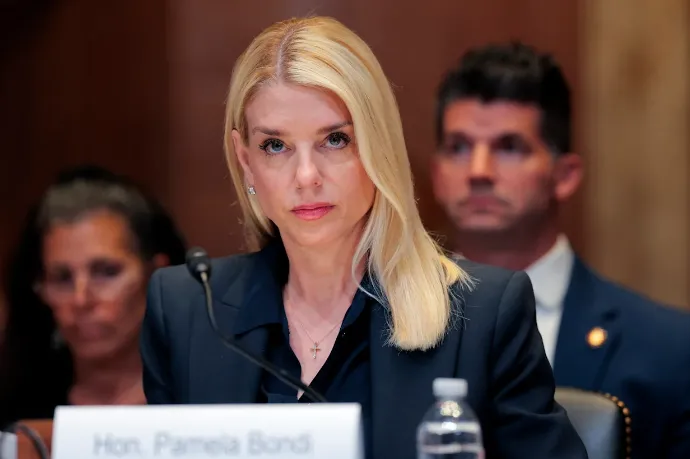
Attorney General Pam Bondi has ignited a political maelstrom by ordering federal prosecutors to launch a grand jury investigation into allegations that members of former President Barack Obama’s administration manufactured intelligence to undermine Donald Trump’s 2016 presidential campaign. Announced on August 4, 2025, this audacious move, spurred by claims from Director of National Intelligence Tulsi Gabbard, has sent shockwaves through Washington, hinting at a potential political cover-up with seismic implications for the Republican administration and the nation’s trust in its institutions.
The probe, first reported by Fox News, stems from Gabbard’s declassification of documents she claims expose a “treasonous conspiracy” by Obama officials to falsely tie Trump to Russian interference in the 2016 election. Bondi, a staunch Trump ally, personally directed an unnamed federal prosecutor to present evidence to a grand jury, which could lead to indictments if the Justice Department pursues a criminal case. The investigation builds on a DOJ strike force formed in July to assess Gabbard’s allegations of “weaponization” within the U.S. intelligence community. Trump, seizing the moment, declared on Truth Social, “The TRUTH always wins out. This is great news,” amplifying the probe’s significance.
The allegations center on a January 2017 intelligence assessment that concluded Russia used disinformation, hacking, and bot farms to damage Hillary Clinton’s campaign and bolster Trump’s, though it found no evidence that Moscow’s efforts altered voting outcomes. Gabbard, a former Democratic congresswoman turned Trump appointee, insists her declassified documents reveal manipulation by Obama’s team to harm Trump. Democrats have dismissed these claims as baseless and politically motivated, with Obama’s spokesperson calling them “ridiculous and a weak attempt at distraction.” The former president himself has reiterated the 2017 assessment’s findings, denying any wrongdoing.
Bondi’s decision to escalate the matter to a grand jury marks a bold escalation, raising questions about the DOJ’s role under Trump’s second term. Critics argue the probe risks politicizing the Justice Department, turning it into a tool for settling old scores. Supporters, however, see it as a necessary step to uncover alleged abuses of power. The investigation’s timing—coming amid Trump’s renewed focus on 2016 election controversies—has fueled speculation about its broader aims. Some suggest it’s a strategic move to rally Trump’s base, while others warn it could deepen national divisions by revisiting a contentious election.
Behind closed doors, the probe’s potential to expose a cover-up has Washington on edge. Gabbard’s documents, including email exchanges and meeting records, purportedly show Obama directing his deputies to craft the 2017 assessment post-election, a claim she frames as evidence of a coordinated effort to delegitimize Trump’s victory. Yet, a bipartisan Senate report from 2020 affirmed Russia’s interference, contradicting Gabbard’s narrative. The lack of concrete evidence supporting her “treasonous conspiracy” charge has led skeptics to question the probe’s legitimacy, especially given Trump’s earlier, unsubstantiated accusation of treason against Obama.
The investigation’s outcome could reshape political narratives. An indictment of Obama-era officials would be a stunning victory for Trump, validating years of claims about a “deep state” conspiracy. Conversely, a failure to substantiate the allegations could undermine Bondi and Gabbard’s credibility, handing Democrats a potent counter-narrative. As the grand jury convenes, the stakes are monumental: trust in the DOJ, the intelligence community, and the electoral process hangs in the balance. Bondi’s bold move has thrust the Obama administration back into the spotlight, ensuring that this probe will reverberate far beyond Washington, potentially altering the course of Trump’s presidency and the nation’s political future.